 Free Shipping* on all orders over $99
*Bulk goods have different shipping charges
Free Shipping* on all orders over $99
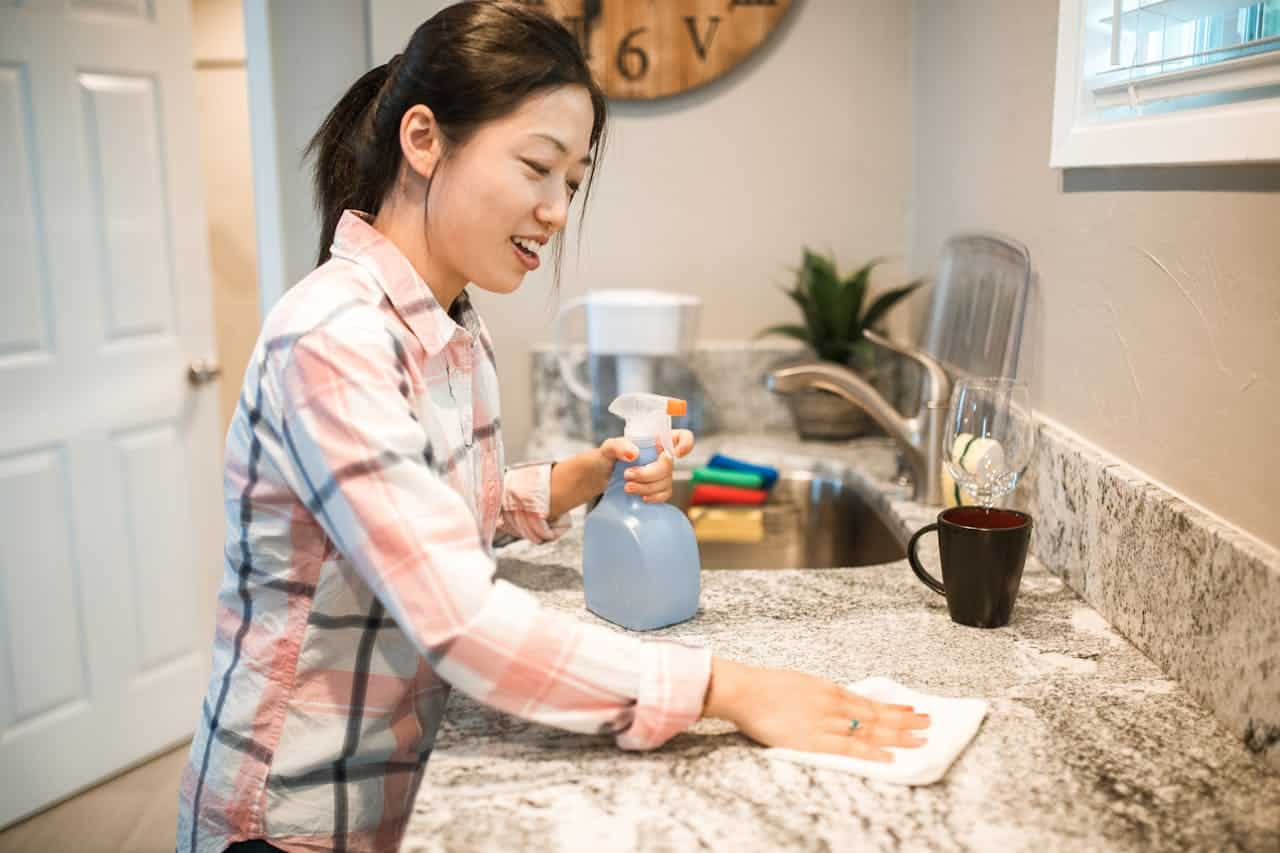
When I first started helping families and customers to make the switch to natural, low-tox routines, I asked them to clean one bathroom with their usual products, shut the door for ten minutes, then open it together. The “clean” smell that hit us was often a wall of fumes, not freshness.
That smell mostly comes from volatile organic compounds (VOCs) and other reactive chemicals that evaporate into the air while you clean. Indoor air quality studies consistently show that levels of many VOCs sit 2–5 times higher indoors than outdoors, and can spike much higher right after cleaning.
Health agencies like the American Lung Association warn that VOCs and other harsh chemicals in cleaning supplies can contribute to headaches, allergic reactions and chronic respiratory problems, and are linked with higher rates of occupational asthma in people who clean for a living.
So when we talk about the benefits of natural cleaning products, we’re really talking about reshaping that air you breathe for hours after you put the spray bottle away.
“Natural” is a fuzzy word in marketing, so I like to be clear about what I mean in practice. In the context of My Health Food Shop’s Eco Home and Eco Cleaning ranges, I’m usually looking for products that:
You’ll see a lot of this reflected in the products in our eco-friendly home cleaning products.
When people ask me for the short version, this is what I tell them. Well-formulated natural or eco cleaners can offer:
Fewer VOCs and irritant chemicals → cleaner indoor air
Lower risk of asthma symptoms and respiratory irritation, especially with fewer sprays and harsh disinfectants
Gentler on skin and eyes, especially for sensitive or eczema-prone users
Safer everyday routine in homes with kids and pets, thanks to lower acute toxicity when used correctly
Reduced impact on waterways and wildlife, using more biodegradable surfactants and lower-tox ingredients
Proven cleaning performance that meets standards like EPA Safer Choice, without relying on the harshest chemicals
When you spray a conventional cleaner, you are not just “wiping away dirt”. You are releasing a mix of VOCs and reactive gases into a relatively closed box — your home.
Common culprits include glycol ethers, solvents and synthetic fragrances. The American Lung Association notes that these emissions can contribute to chronic respiratory issues, headaches and allergic reactions, especially in people with asthma.
Several recent indoor air studies make this very real. Indoor VOC levels often sit 2-5 times higher than outdoors, and cleaning activities can push certain VOCs to many times that level for hours afterwards. One 2025 home-cleaning study found that about 60% of measured VOCs increased after routine cleaning, including those linked with respiratory irritation.
The first thing I do with a new client is not to empty their cupboard. I help them rank products by impact. The most frequent sprays and wipes sit at the top of the list. Those are the ones I replace first with low-VOC natural cleaning products.
Well-formulated eco cleaners help because they:
On My Health Food Shop, that first step usually means sending people to the eco-friendly home cleaning products section and choosing an all-purpose cleaner or kitchen spray that matches this low-VOC profile.
I see the same scenario often. Someone keeps a very clean home, yet they live with frequent wheeze, throat tightness or a cough that flares on cleaning days. They rarely connect that pattern to what they spray and pour around their face.
Epidemiological studies show a consistent link between regular use of household cleaning sprays and new-onset adult asthma. One long-running study found that non-professional use of common cleaning sprays that contain harsh chemicals is associated with a significantly higher risk of asthma in adults.
The harmful chemicals most often implicated include:
When we redesign a home’s low tox home cleaning routine, the biggest respiratory wins usually come from three changes.
A lot of people measure cleaning success by how their bathroom looks. I measure it by how their hands look at the end of the week. When knuckles crack and the skin around nails stays red, the products in use deserve a closer look.
Traditional cleaning products often rely on a mix of:
Dermatology and toxicology work on surfactants and cleaning ingredients confirms that some surfactants and fragrances can irritate skin and disrupt cellular function when exposure continues over time.
Natural cleaning solutions focus on the same outcome (a clean surface or fabric) without pushing the skin so hard.
Formulators lean toward milder plant-based surfactants and more moderate pH ranges, which are kinder on the skin barrier while still lifting soil and grease. Programs such as Safer Choice help here because they screen out ingredients with unacceptable skin or eye irritation profiles and look at whole formulas, not single ingredients in isolation.
In my work with sensitive-skin clients, I normally start with three product changes:
A natural laundry detergent for sensitive skin, ideally fragrance-free or very lightly scented and free of optical brighteners.
A milder dishwashing liquid or dish powder that relies on plant surfactants and lower fragrance load.
A more gentle bathroom or multipurpose cleaner so splashes on hands do less damage.
After a month, most people notice less tightness and redness in their hands. Clothes still feel clean, but skin reacts less. That lived experience does more for trust in eco products than any marketing line.
Any parent knows that toddlers behave like small scientists. They taste, touch and climb everything. The same curiosity that helps them learn also brings them face to face with cleaning products in cupboards and on floors.
Poison control data highlight how serious that can be. Studies report that household cleaning products sit among the most common causes of unintentional poisoning in children under six, often through swallowing “a sip” of a colourful product, inhaling fumes or getting a splash in the eyes. Pets follow a similar pattern; they walk on freshly cleaned floors, lick paws and explore low cupboards.
The worst outcomes usually involve:
No cleaner becomes “safe to drink” once you add a leaf on the label. The key difference lies in how severe the damage is likely to be when something goes wrong.
Because well-chosen eco friendly cleaning products:
… the outcome of a small accidental exposure tends to be less dramatic than with a strong drain opener or bleach spray.
Once the bubbles vanish down the drain, most people stop thinking about their cleaners. The environment does not have that option. Wastewater treatment removes a lot, but not everything, and smaller or rural systems carry more of the load.
Environmental reviews on surfactants describe them as an emerging pollutant of concern because of their wide use, incomplete removal and potential to harm aquatic organisms. Some conventional surfactants can damage cell membranes in fish and invertebrates at relatively low concentrations, while phosphates in detergents feed algal blooms and reduce oxygen for other life in rivers and lakes.
Natural and eco brands approach the problem with three main levers:
One of the biggest mental barriers I face with new clients sounds like this:
“I get the benefits of natural products, but do they actually clean as well?”
That doubt made sense a decade ago when many eco lines felt weaker. Over the last few years, the picture shifted. The EPA Safer Choice program and similar eco labels require products to meet performance tests that show they clean at least as well as conventional benchmarks.
Brands now use:
Across homes I work with, once people choose the right product for the job, they rarely complain about performance. Benches feel clean, glass looks clear and laundry comes out fresh, without the choking fumes.
There are still moments when a stronger disinfectant earns a place on the shelf:
Recent guidance and articles on healthy cleaning stress that overuse of disinfectants adds health risks without extra benefit for ordinary, day-to-day dirt. The balanced approach is to use natural cleaning products for daily routine, then bring out stronger disinfectants for genuine infection control, with good ventilation and gloves.
Natural cleaning products are often safer, but not automatically safe in every context. Even the American Lung Association notes that some “natural” ingredients, such as vinegar and certain essential oils, can irritate lungs, eyes or skin in sensitive users.
For daily tasks, good science-backed natural cleaning products usually work just as well. Safer Choice and similar programs only approve products that pass strict performance criteria, which means they have to match or exceed the cleaning power of comparable conventional products.
DIY cleaners can play a small role, but it helps to keep expectations realistic. Vinegar, bicarbonate of soda and simple soap recipes can clean glass, light benchtop soils and some limescale, but they do not count as registered disinfectants, and mixing them with bleach or other products creates real hazards.
Thoughtful natural cleaning products cut a lot of unnecessary noise out of your home. The shift does not need a perfect, overnight overhaul. In homes, the biggest wins arrive when you replace the “everyday workhorses” first. Families tell me they notice calmer skin, milder smells and easier breathing long before the bottle runs out, and that feedback matters more than any slogan.
If you are ready for that next step, I encourage you to explore the Eco-Friendly Home Products ranges at My Health Food Shop.


© 2026 My Health Food Shop (Formerly Rainbow Organic). All Rights Reserved



Leave a Reply
Your email address will not be published. Required fields are marked *